Clearing scope
Selective clearing around keeper oaks
A scope example for selective tree clearing in Lake County, covering 2.3 acres with a machine plan of 3 machine days. Compare the method, material handling, and intended finish with your property before requesting a written estimate.
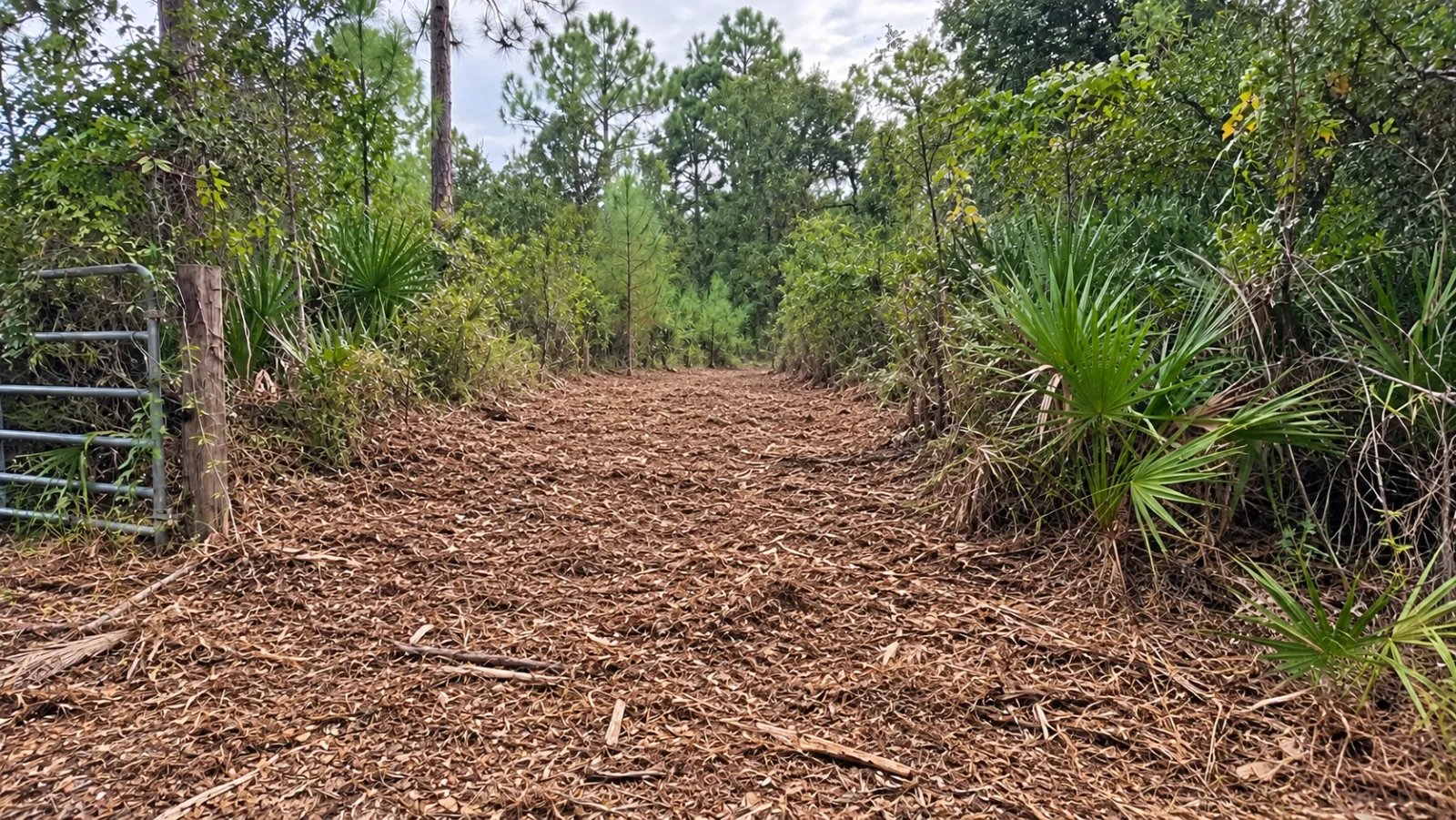
How the scope would be confirmed
Rough Grading After Clearing fits freshly cleared homesites, field entrances, shop pads, staging areas, and access lanes. The first question is not how many acres appear on the tax record. We need the actual work limits. An owner may have ten acres and only need a driveway, a house footprint, and a shaded yard opened. Another property may be less than one acre but packed with vines, fence wire, mature stems, and nowhere to stage debris. Those are different jobs and they should not receive the same per-acre guess.
We ask what happens next. Mowed land needs a different finish from a construction footprint. A trail can tolerate roots that a slab cannot. The useful scope follows the next use of the property.
What we remove and what can stay
The working plan separates brush, vines, palmetto, saplings, larger trees, stumps, root balls, and man-made debris. The expected result can leave a rough construction surface; imported fill, compaction testing, drainage design, and finish grading are separate scopes. Keeper trees should be marked before work begins, especially when the understory is thick enough to hide trunks from the cab. We can work to an owner-marked limit, a survey line, or a painted work zone, but we do not guess a boundary.
Cutting vegetation at the surface is not the same as removing the root system. That difference matters for a fence post, driveway edge, building pad, or future trench. We write the stump and root treatment into the proposal so there is no argument at the end about whether “cleared” meant mulched low, cut flush, ground, pulled, or grubbed out.
The machine and method
The method uses dozer, skid steer, or excavator passes after debris and major roots are out of the working area. A skid steer with a forestry head is nimble and works well around keeper trees. A dedicated mulcher carries more power through heavier continuous material. An excavator reaches, separates roots, handles larger pieces, and works from a stable position. A dozer moves material and shapes open ground, but it is not automatically the best first machine for every wooded lot.
We choose equipment for production and control, not for a photograph. A large machine that cannot enter cleanly can cost more than a smaller unit that stays moving. A clearing estimate starts at the entrance, not at the back property line. We measure gate width, overhead limbs, culverts, road shoulders, turnarounds, slopes, and soft approaches before confirming mobilization.
Brush, stumps, roots, and debris after the pass
Mulch is useful when the owner wants organic material left across the surface. It is not a substitute for removing roots from a future building pad. Piles save trucking but take space and may need another visit. Haul-off clears the site faster but adds loading time, trucking, disposal, and road cleanup. The proposal states whether material is mulched, stacked, loaded, hauled, or left for another contractor. Large logs can be separated when the owner has a use for them, but merchantable value should never be assumed without a timber buyer and a suitable volume.
A clean surface can still contain roots and buried organic material. If the next step needs grubbing, we price grubbing. If it only needs access and mowing, we do not sell unnecessary excavation.
Machine days and schedule
We estimate production in machine days because density, stem size, terrain, and handling determine output more reliably than acreage alone. A machine day includes a working machine and operator for the planned shift. The machine-day estimate states which unit is expected to work and what result that time should produce. Mobilization, support equipment, haul trucks, disposal, permit work, imported material, and unusually long travel are listed separately when they apply. Weather or a newly discovered buried obstruction can change the sequence, but the owner should know why.
Photos help us choose a starting range. We need the entrance from the public road, the thickest vegetation, an average area, the largest stems, wet spots, overhead hazards, and anything the crew must keep. A short walking video is often more useful than twenty close-ups of leaves. After that review, we decide whether a site visit is necessary before a firm scope.